Trades and services
You paid for the materials. They pay you when they get to it.
Plumbers, electricians, painters, landscapers, cleaners, and HVAC crews all run the same week. The supply house wants its money on the day. The crew gets paid on Friday. The invoice sits in somebody's inbox. Dicopay sends the invoice for free, chases it for you, and checks it for a financing offer from independent regulated lending partners.
Invoicing and reminders are free, always. There is no monthly fee, no card, and no trial that runs out. You only pay if you take the cash.
Dicopay's invoicing app is live in Sweden today. Financing availability, pricing, and partners vary by country.
How a job pays
You pay for the job first, and you wait for it twice.
Nothing below is a bad customer or a mistake on your side. It is the ordinary order of events on a trades job, and it is why a profitable month can still leave the account short.
You quote the job and win it
The price is agreed and the date is booked. Nothing has gone out yet, and nothing has come in.
You buy the materials before the first day on site
The list is copper, cable, paint, timber, plants, filters, and a replacement compressor. The supply house wants payment on the day, or on a trade account that is already carrying the last job. That money leaves your bank before anyone has picked up a tool.
You pay the crew every week
Two people, three, or five, plus a subcontractor on the bigger weeks. They get paid on payday whether or not the customer has paid you. That date does not move and it is not negotiable.
You finish, and then you have to find the right person
On a house it is the homeowner. On a commercial job it is an accounts payable desk that never saw the work and needs a reference number you were never given. The clock usually starts when the invoice reaches that desk, not when you swept up.
You wait, then you chase in the evening
Nobody is disputing the amount. It is sitting on a desk while your next materials order is already due, and you are the one writing another polite email at 9 p.m.
Illustrative example
A $9,000 bathroom refit takes $3,400 of materials on day one and two weeks of crew time. You invoice on the Friday you finish. If that invoice runs the ordinary course of 37 to 38 days, the money arrives more than a month after the customer moved back in. In that window you buy materials for the next two jobs and pay the crew five more times.
$17,500
The average US small business with invoices outstanding is owed $17,500.
Intuit QuickBooks Small Business Late Payments Report, May 2025
37 to 38 days
A US invoice takes 28.8 to 29.3 days of payment terms plus 8.5 to 9 days of lateness, so 37 to 38 days in total.
Dicopay calculation from Xero Small Business Insights US, 2026
What is free
Everything you need to bill a job costs nothing.
Invoicing is free with no monthly fee, no seat fee, and no card. It is not a trial and it is not free for your first ten invoices. Contracts, e-signature, and time reporting are included at the same price, which is nothing.
Write the invoice from your phone in the van before you pull off the driveway, or from the kitchen table later. Your customer opens it on their phone, approves it, and pays in full, on invoice up to 60 days, or in installments. They do not need an account and they do not need to install anything.
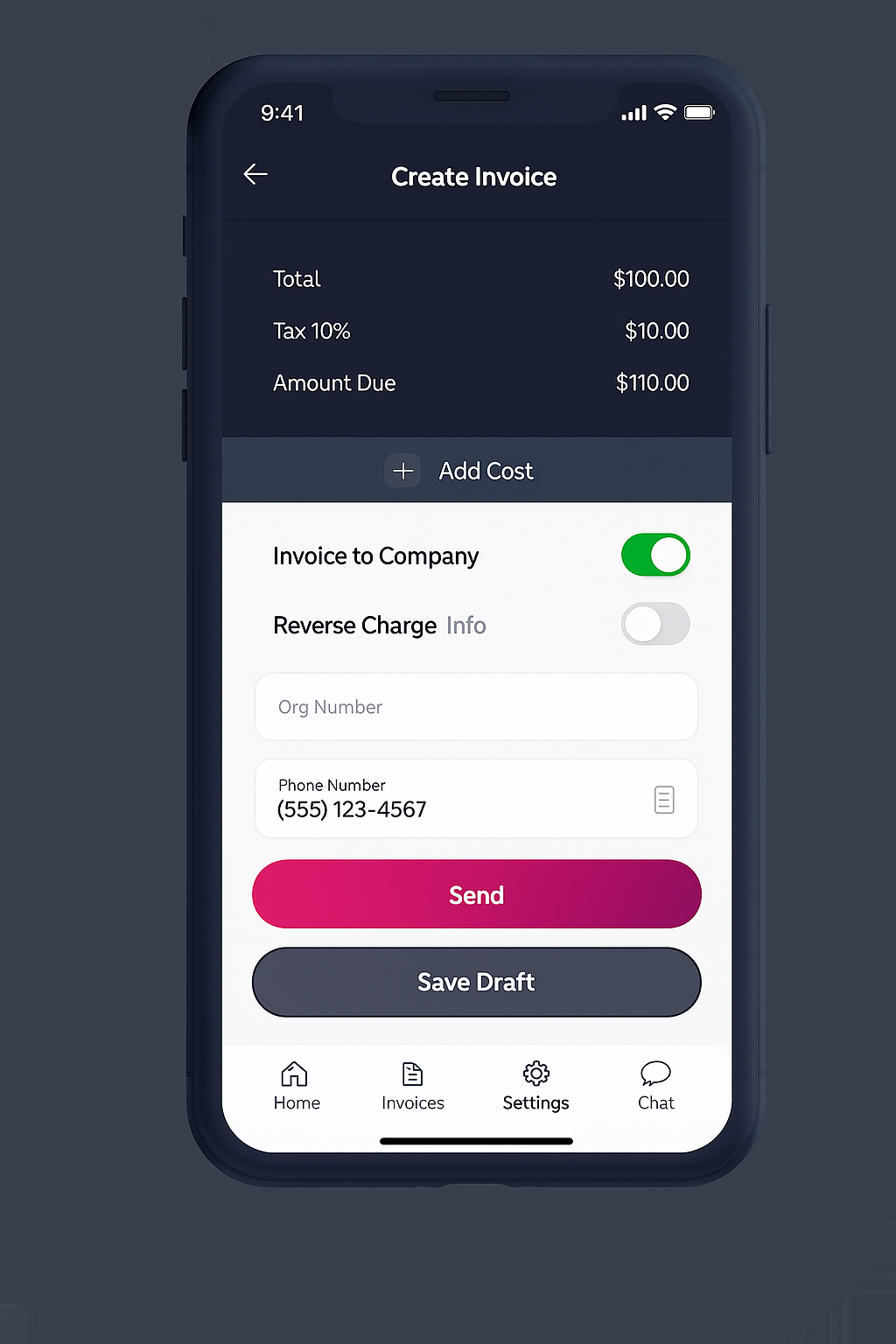
Invoices and job paperwork
Line items, materials, labor, and tax on one invoice. Contracts and e-signature are in the same app, so the customer signs the job off before your crew books the day.
Time reporting for the crew
Hours are logged against the job and carried onto the invoice. The customer sees what they are paying for, which is most of the argument gone before it starts.
A customer who can just pay
They open the invoice on their phone, approve it, and choose to pay in full, on invoice up to 60 days, or in installments. They do not need an account, a portal, or a password to reset.
The chasing happens without you.
Automatic payment reminders go out before the due date and after it, from Dicopay on your behalf. Each one carries a payment link, so the customer can settle it from the reminder itself. You are not the person nagging a homeowner you will see at the hardware store, and you are not the person emailing an accounts payable desk on a Sunday.
The dashboard lists what is overdue and what has not been approved yet, so you can see where every job stands without opening a spreadsheet. The reminders cost nothing and they run on every invoice you send.
Who uses it
Built for a crew with no office behind it.
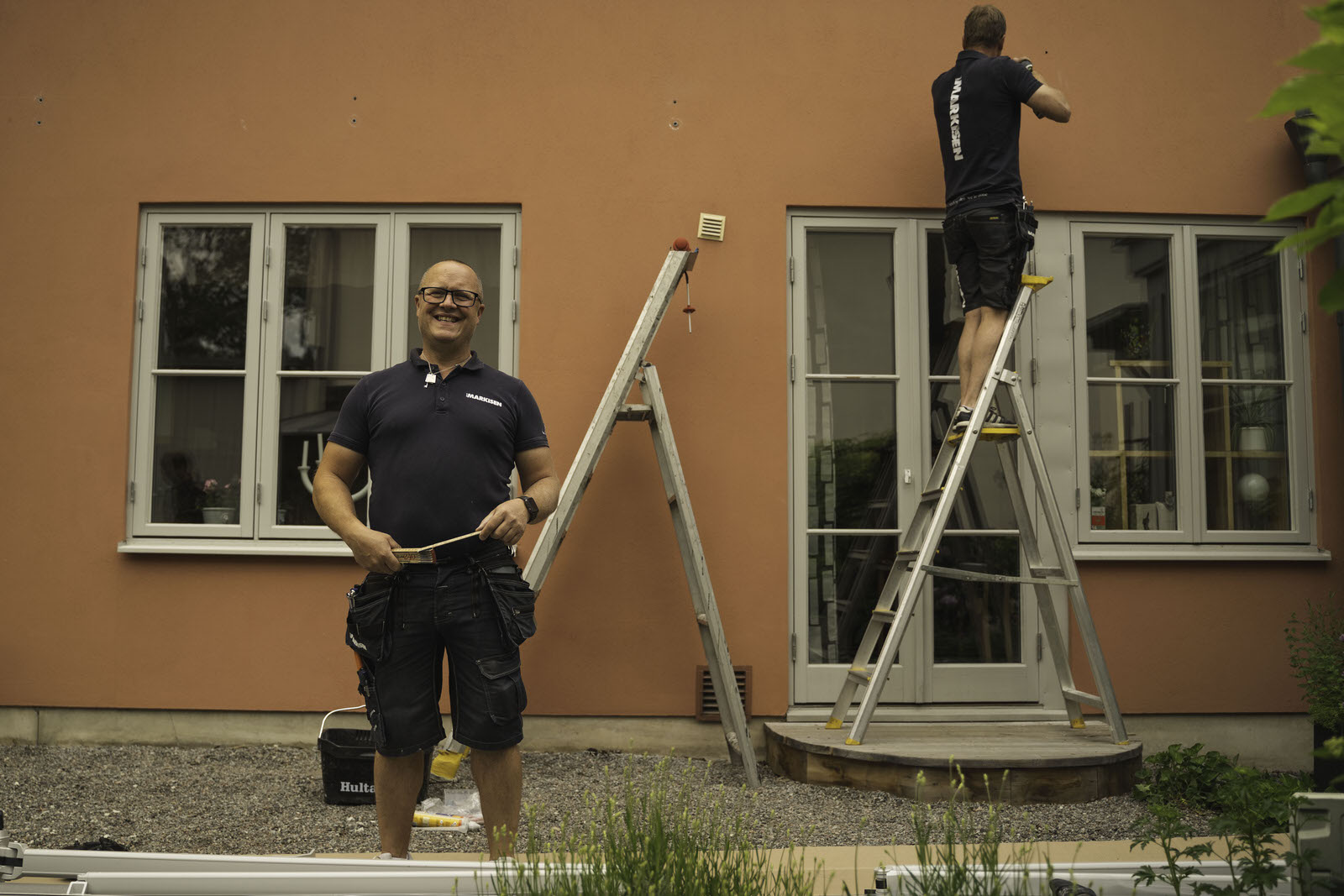
3,000 Swedish businesses have onboarded to Dicopay since launch: tradespeople, clinics, shops, one-person operations, and small crews. In Sweden you sign in with BankID and onboarding takes about a minute, with no forms and no sales call.
There is no trades edition and no trades pricing. It is the same product a chiropractor or a small shop uses, because the problem is the same one: the work is finished and the money is somewhere else.
“It has made things enormously easier for me.”

If you need it sooner
The cash offer is there, and you can ignore it.
Most of what is on this page is free and stays free. This part is optional, and plenty of businesses on Dicopay never use it.
Checked on every invoice
Each invoice you issue to another business or a public body is checked for a financing offer. Looking costs nothing, and declining costs nothing.
One invoice at a time
There is no contract, no minimum, and no requirement to put the rest of your work through it. Take the offer on the invoice that covers next week's materials and leave the others alone.
Nothing changes for the customer
Your customer gets the same invoice, the same due date, and the same payment instructions. If you accept an offer, your customer approves on their phone and the money is in your account within 24 hours.
Dicopay is not a lender.
Financing is provided by independent regulated lending partners. They decide eligibility, they set the pricing, and they write the terms, and all of it is disclosed to you before you accept anything. Dicopay is paid a referral fee by the partner when a deal funds, which is how the invoicing stays free. Offers are subject to approval and not every invoice qualifies. Pricing on the financing side is per invoice, quoted by the funding partner before you agree to it.
FAQ
Questions from the van and the kitchen table.
Is the invoicing actually free, or free for a while?
It is free. There is no monthly fee, no seat fee, no card required, and no invoice limit. Contracts, e-signature, time reporting, and the automatic reminders are included at no cost. We are paid a referral fee by a lending partner when somebody chooses to take a financing offer, and that is the whole business model.
Most of my customers are homeowners. Can I still use this?
Yes. You can send invoices to anyone and the reminders run on all of them, for free. Financing applies to invoices issued to another business or a public body, so a landlord, a builder, or a facilities contractor may qualify and a private homeowner will not. The free half of the product does not care who the customer is.
Can my customer spread the payment without me carrying it?
Your customer opens the invoice on their phone and chooses to pay in full, on invoice up to 60 days, or in installments. What happens on your side depends on the invoice and on any offer you accept, and the terms are set out in full before you agree to anything.
Do I have to take a financing offer?
No. Checking what an invoice is worth costs nothing and you can decline every offer forever without paying us anything. Many businesses use Dicopay purely for free invoicing and reminders. The offer sits there and you ignore it.
Easy invoicing, fast cash.
Send the invoice for free, let the reminders do the chasing, and see what the job is worth today. If the number is not worth it, close the tab and keep the free half.
Start invoicing for free No card. No subscription. No obligation to accept an offer.